
Bethia Cassie was identified as a female lighting technician who climbed the ranks from her time as a duster in 1917 to 1947 where she was working alongside the chief electrician.
Check out the article that inspired us to dig deeper. It was unusual for a woman of her status to be employed as an electrician in a male-dominated work environment for over 30 years. Half of an article was all we had until one volunteer came ready to find out who the real Bertha, or shall we say, Bethia (since The People’s Journal got her name wrong), was.
Feminist icon?
According to Scotsman journalist, Jane Bradley, Bethia Cassie was just that. In her article published on the 1st October, Jane writes that this mother of three pushed through any semblance of imposter syndrome to make a name in the theatre world. Despite the job as Lighting Technician being a more common man’s job, Bethia stepped up to becoming so well known, as she admits, ”[she] became something of a by-word in the theatrical profession.”
The Scotsman Editorial
A volunteer’s discovery
In spring 2024, volunteer Ruth Bowman set about the lofty task of finding out who Bertha was. All we had was half of an article and a name. After weeks of fruitless efforts, Ruth had the idea to check the census records. It was here that she found not a Bertha, but a Bethia Cassie listed as working at The King’s Theatre. The past year, Ruth has been able to create a full genealogy for Bethia’s family and has even tracked down her descendants. Bethia, a remarkable woman who rose the ranks from cleaner to lighting technician, was almost lost to us because of her name. Ruth Bowman has dedicated over 300 volunteer hours to researching her life and experiences. Recently, Jane Bradley from The Scotsman, sat down to interview her about her experience researching our Bethia.
Interview with Ruth Bowman
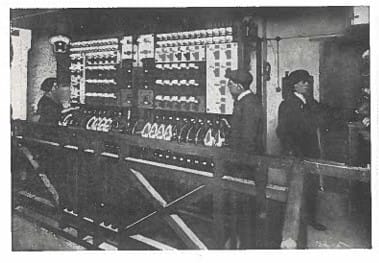
Bertha: The lady who lights the stage



In her words
Read below to learn about Bethia’s debut as switchboard operator and her cheeky confrontations with the stars taken from her interview with The People’s Journal.
My debut as switchboard operator was made two or three weeks later when Mr Taylor had gone away on holiday...and on opening night I was again terribly nervous, knowing that so much depended on me and that I stood or fell by my handling of matters that night. The overture by the orchestra ceased, the curtain went up, and there was the stage lighted as per instructions in the lighting plot. Everything seemed to be all right. But everything was not in order, as I realised with a shock when [the lead character] walked slowly upstage to the prompt side...and, stationing himself as close to the switchboard as possible, whispered, ‘House lights, house lights.’ It was then that I found to my horror that I had forgotten to lower the house lights, and while the stage setting was in perfect order the auditorium was still a blaze of light.The People's Journal, 2 October 1937, Bethia Cassie
Bergner’s dislike of personal publicity and ostentation in any shape or form is well known, but that did not deter me from going to her dressing-room and presenting my autograph book to her maid with the request that Miss Bergner might sign it. I jestingly added that unless I obtained the signature I would black out Miss Bergner, and when the book was presented to the actress she laughed, remarking that she knew Bertha well, and that she hoped the threat would not be fulfilled.The People's Journal, 2 October 1937, Bethia Cassie
Bethia’s contemporaries
Bethia worked alongside theatre manager Stewart Cruikshank during her time working the switchboards. She also worked alongside Musical Director, Douglas Willcox who wrote about her in his World War I recollections. Hear what other colleagues had to say about upgrades made to the King’s electrics in 1927.
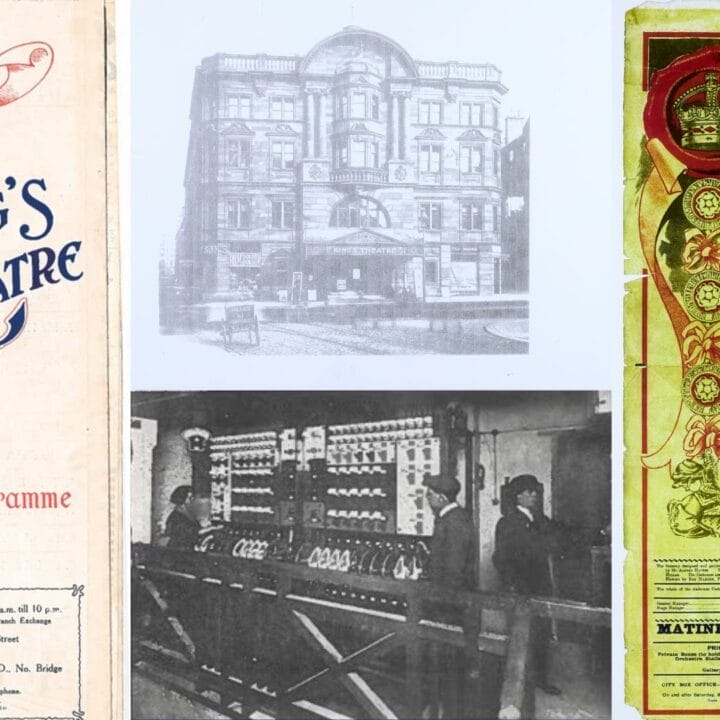
Although his building was already the best theatre in Scotland, Mr Cruikshank has spent £15,000 in the last 18 months merely making it better. They call him foolish, but he replies that efficiency always pays. Before deciding on a lighting system most suitable for a provincial theatre, he visited every theatre of importance in Paris, Berlin and Stockholm, while he’s been to New York twice in search of novelties and ideas... the lighting men have electric cues, and one girl can manage the switchboard controlling all the light in the theatre. In fact during the pantomime season, this alone saved £30 a week in ‘juice’ and staff.Daily Express, 4 November 1927, Bethia Cassie
OLD COPY Spotlight On: Thematic Journeys Through The King's Heritage
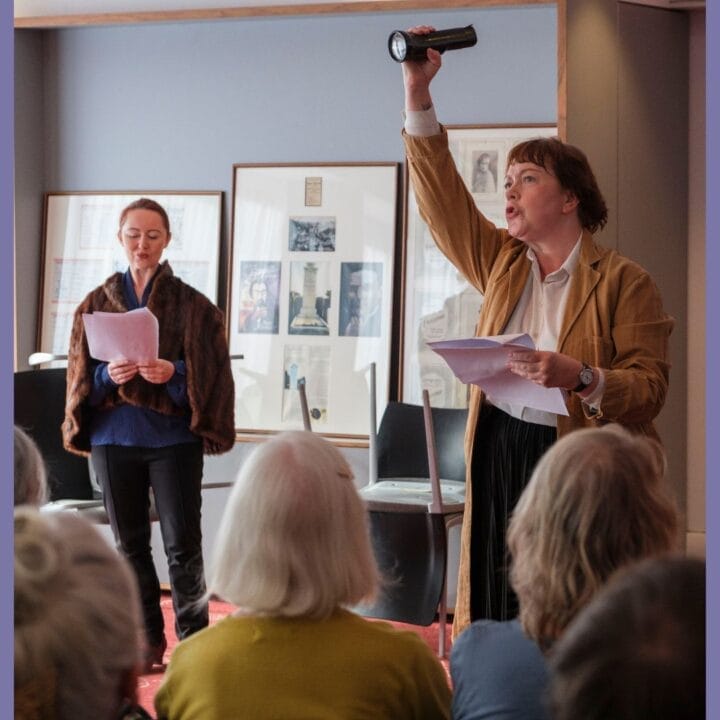
Bringing Bertha to life
