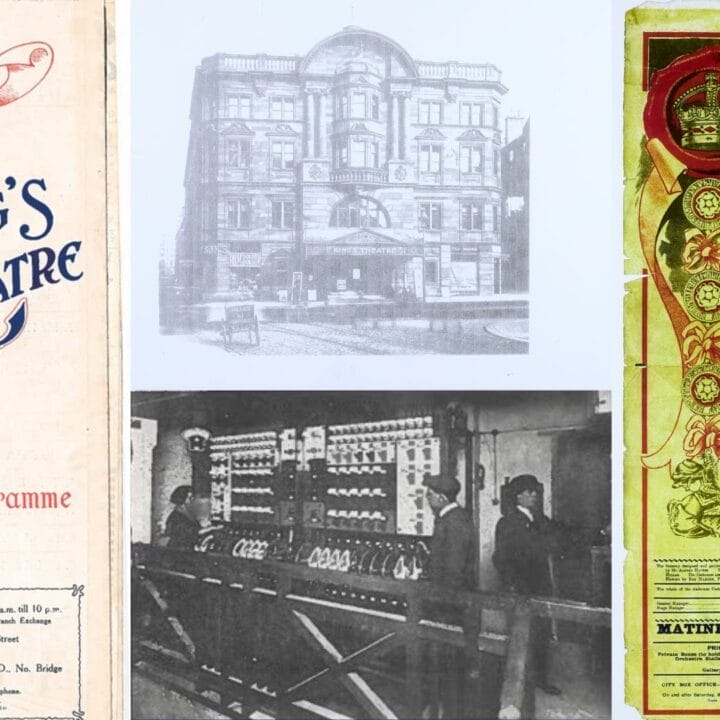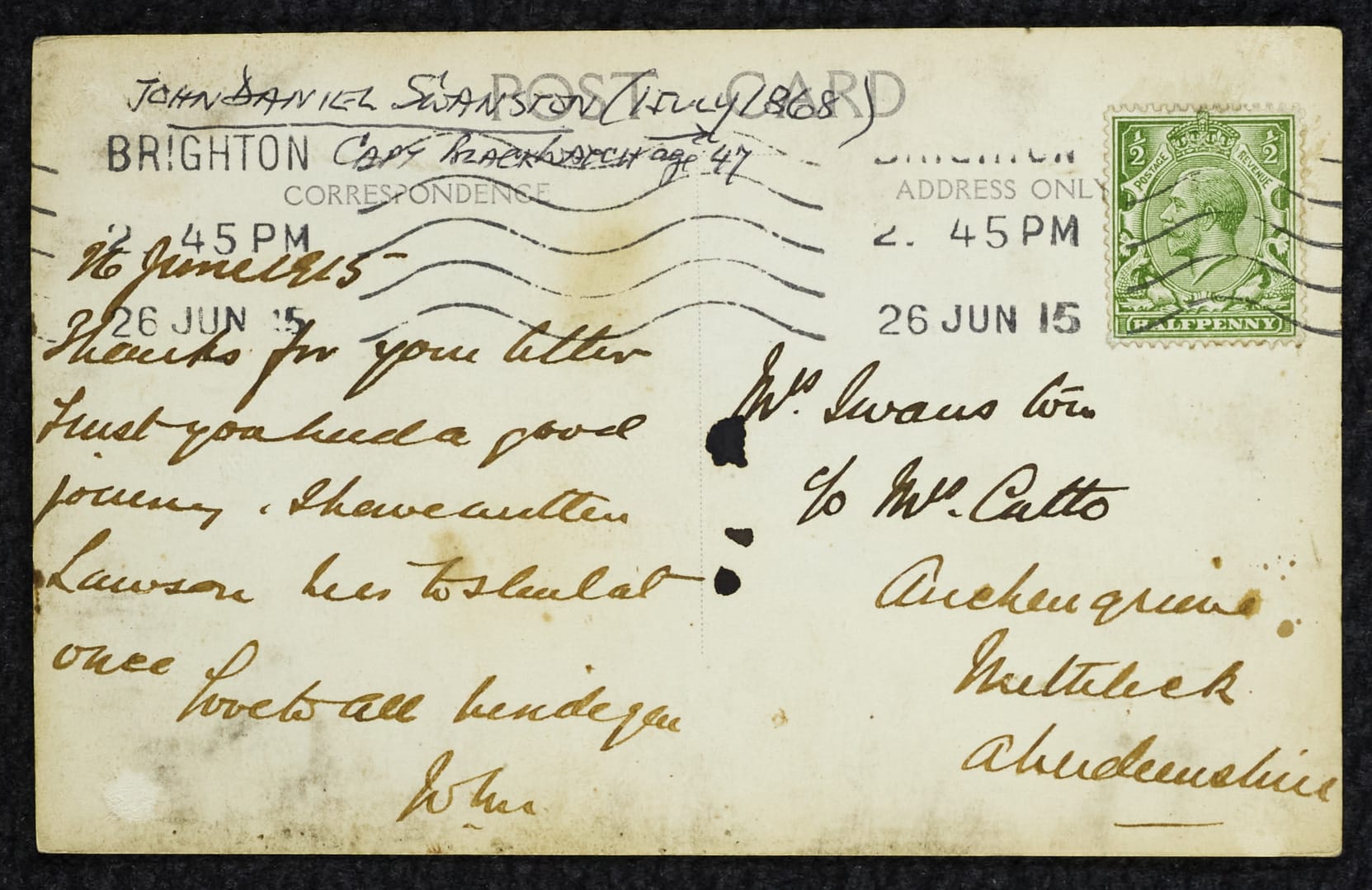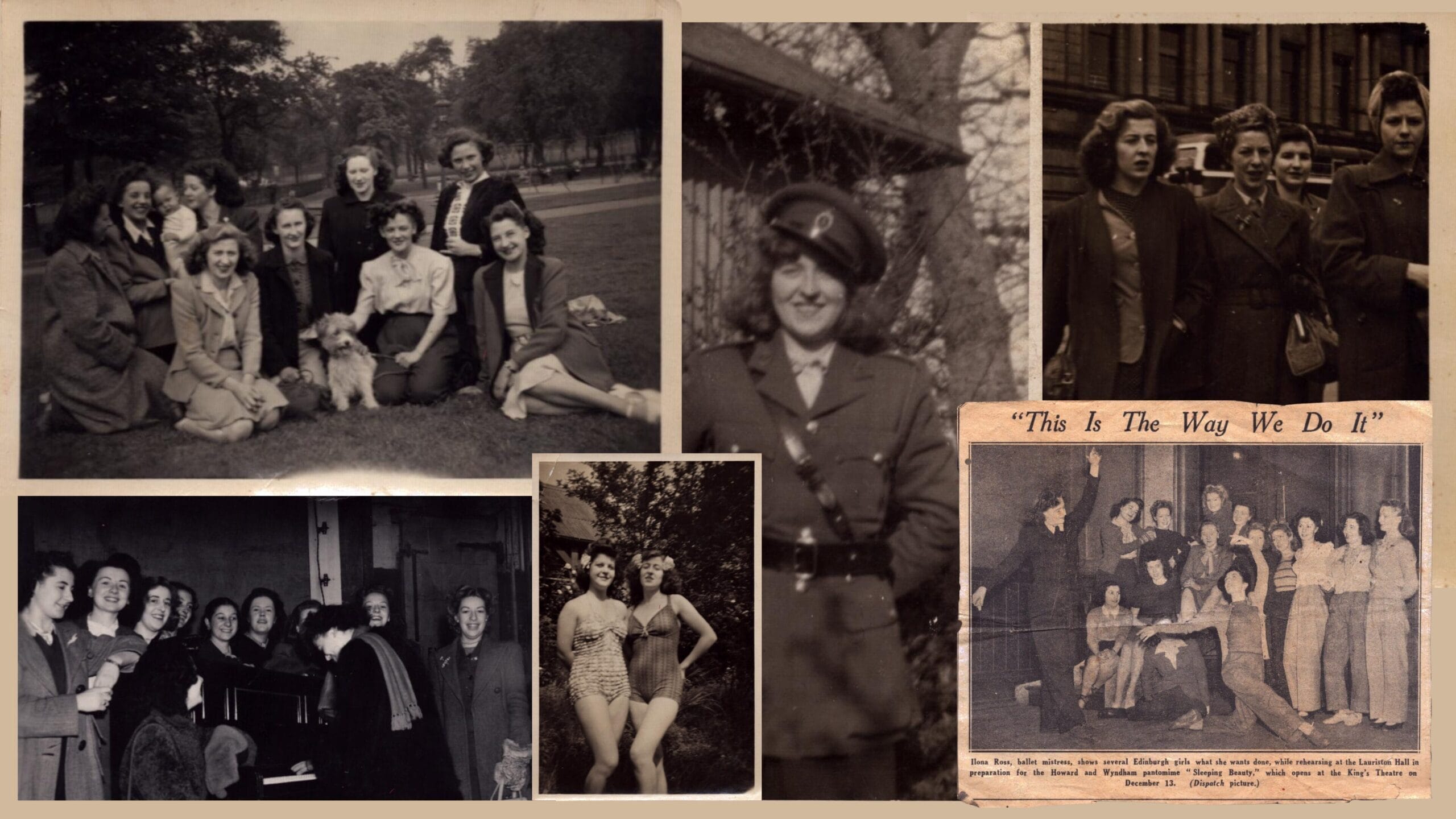
This year the King’s Theatre Archive received a remarkable donation from variety dancer Mary Rose, rounding out our Variety Theatre collection. Article by Lily Bloom.
The origin of the Mary Rose collection
Mary Rose was a dancer in one of Scotland’s most celebrated variety shows, The Half-Past Eight Show. First opening in 1937, the production enjoyed great success until the mid-1950s, offering audiences a dazzling blend of song, dance, and comedy. Along with its successor, The Five-Past Eight Show, it became a platform for some of the biggest names in Scottish entertainment, including Harry Gordon, Stanley Baxter, and Jimmy Logan.
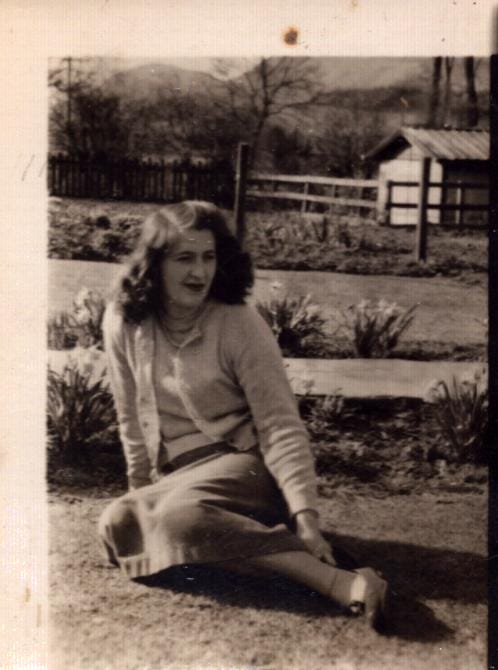
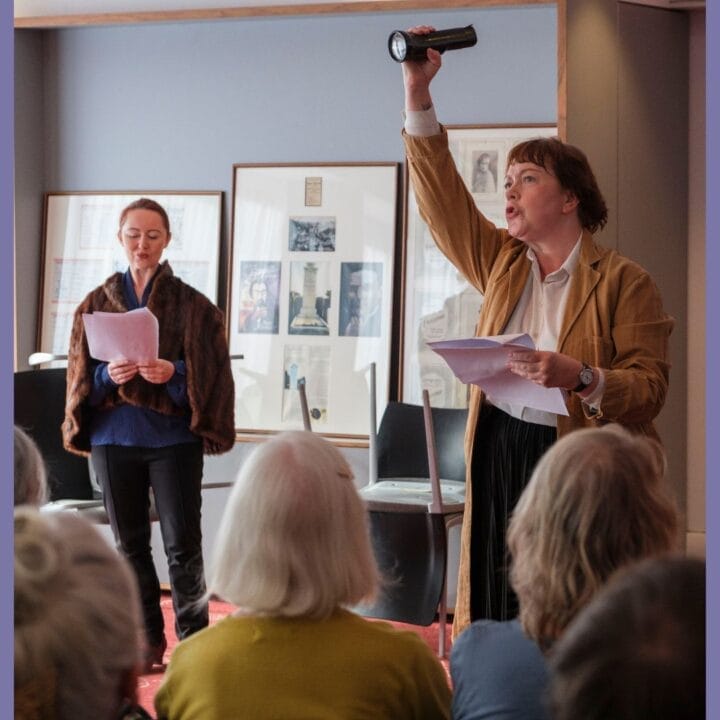
As a volunteer with The People’s Archive, I had the privilege of meeting Jane Gillespie, Mary Rose’s daughter, who generously donated the collection. We also recorded an Oral History with Jane, capturing her personal memories of the King’s Theatre and reflections on her mother’s life and career.
Although Mary Rose retired from dancing before she became a mother, Jane grew up with a strong awareness of her mother’s past on stage. She fondly remembered being shown photographs of the shows as a child, particularly the striking black-and-white images of dancers that had been carefully coloured by hand.

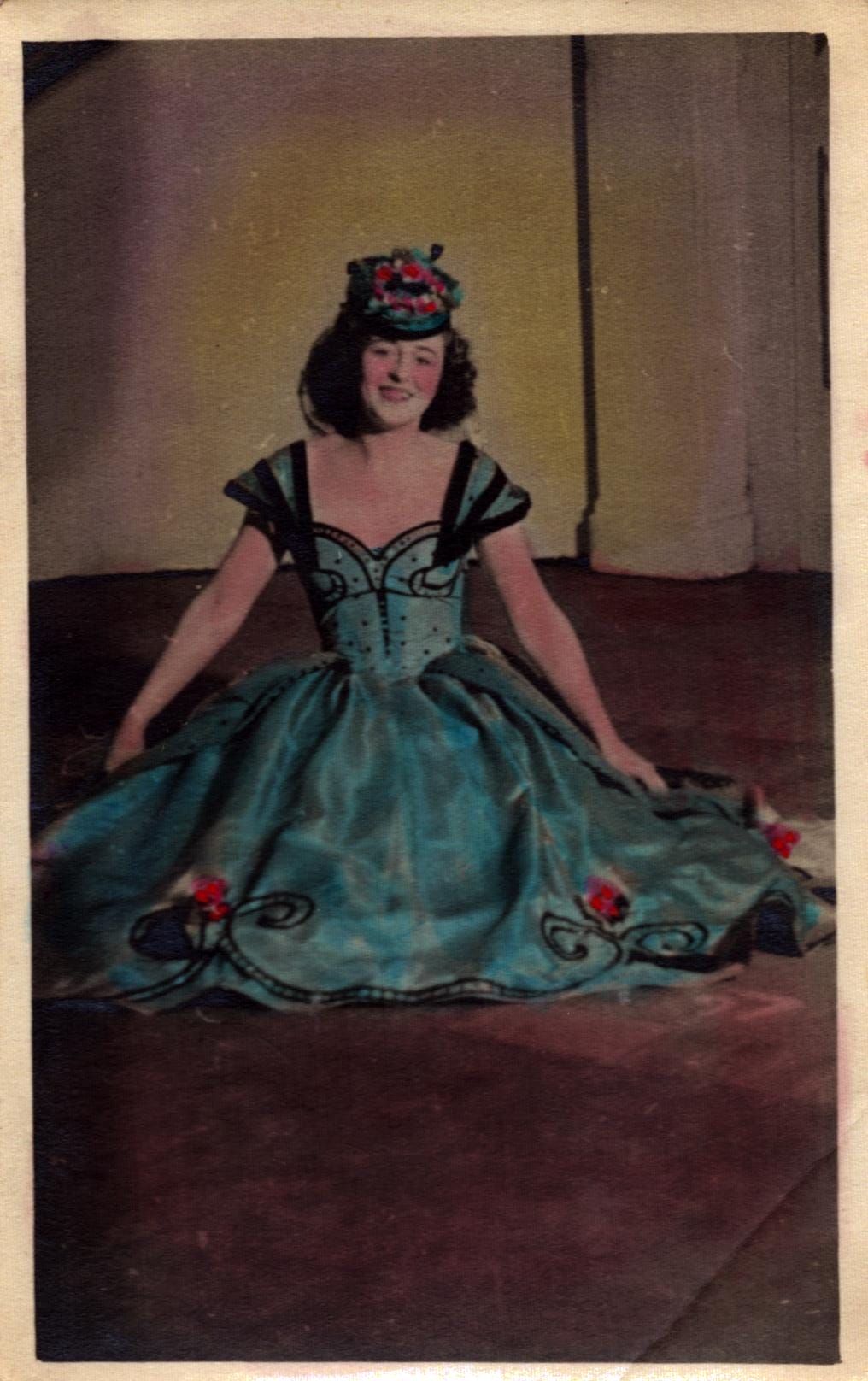


Even after her retirement, theatre remained a cherished part of Mary Rose’s family life. Jane recalls that they would never miss the King’s pantomime:
Every Christmas we'd end up in the King’s to see the Panto. So that was from the age of eight onwards - and that was what happened every year. I loved it… absolutely loved it.Jane Gillespie
For me, as someone who is not originally from Edinburgh, one of the most moving discoveries has been just how deeply the King’s Theatre has woven itself into people’s lives. From the 1930s through to the 1960s, variety was not only entertainment – it was a cultural phenomenon in Scotland. Hundreds of actors, comedians, dancers, and musicians graced the stage, while millions more filled the auditorium with laughter and applause. Yet many of their stories have faded with time, even within their own lifetimes.

In my conversation with Ms Gillespie, I was struck by the duality of these lives. For many women in particular, careers often ended with marriage, and as family responsibilities grew, so too did the need to pursue other work. Their talents and experiences, once so central to the stage, were too often left behind.
Jane’s words capture both admiration and a sense of what might have been:
I don't even know how she came into the dancing career - but she certainly could dance. I did ask her once to teach me how to tap dance, but we lived on a top floor [and] she said she couldn't because the old lady downstairs wouldn't like it. I wish she had.Jane Gillespie
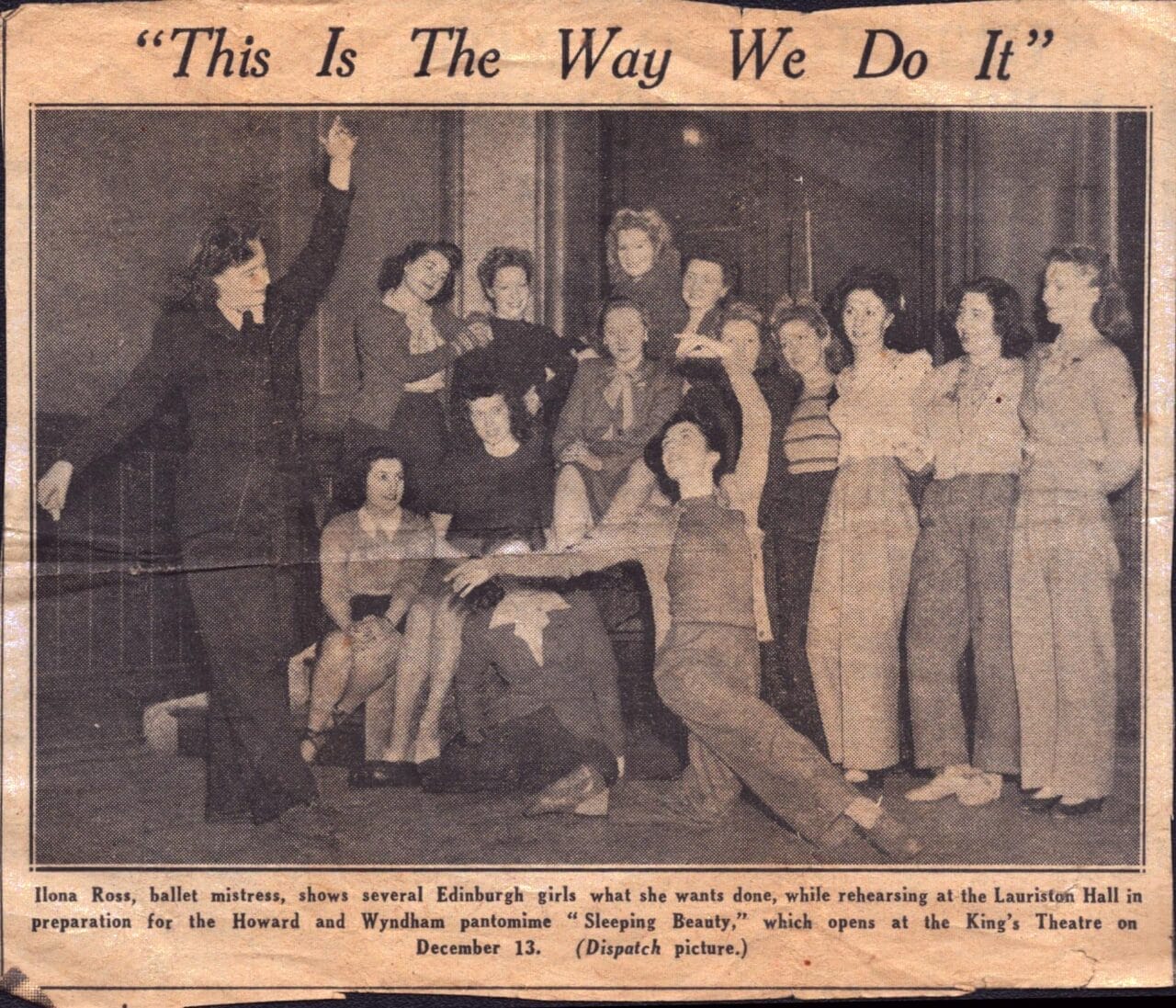
The People’s Archive exists to preserve and share these stories – not only the achievements of household names, but also the experiences of the countless individuals without whom the curtain could never have risen. To me, this is the heart of our work: honouring the legacy of all those who brought the King’s Theatre to life, and ensuring their stories continue to inspire future generations.
My Dad, when they were engaged, he used to go and see her in the King’s and he said he could always pick out my mother. When all the girls were standing waiting to come out, he could always see her heart beating because she was nervous, poor thing…Jane Gillespie
Jane Gillespie’s Oral History is one of this month’s highlighted Oral Histories. You can listen to some clips and read the full transcript here.